Boilers and water heaters
Continuous oxygen and temperature visibility for commercial boilers and large water heaters.
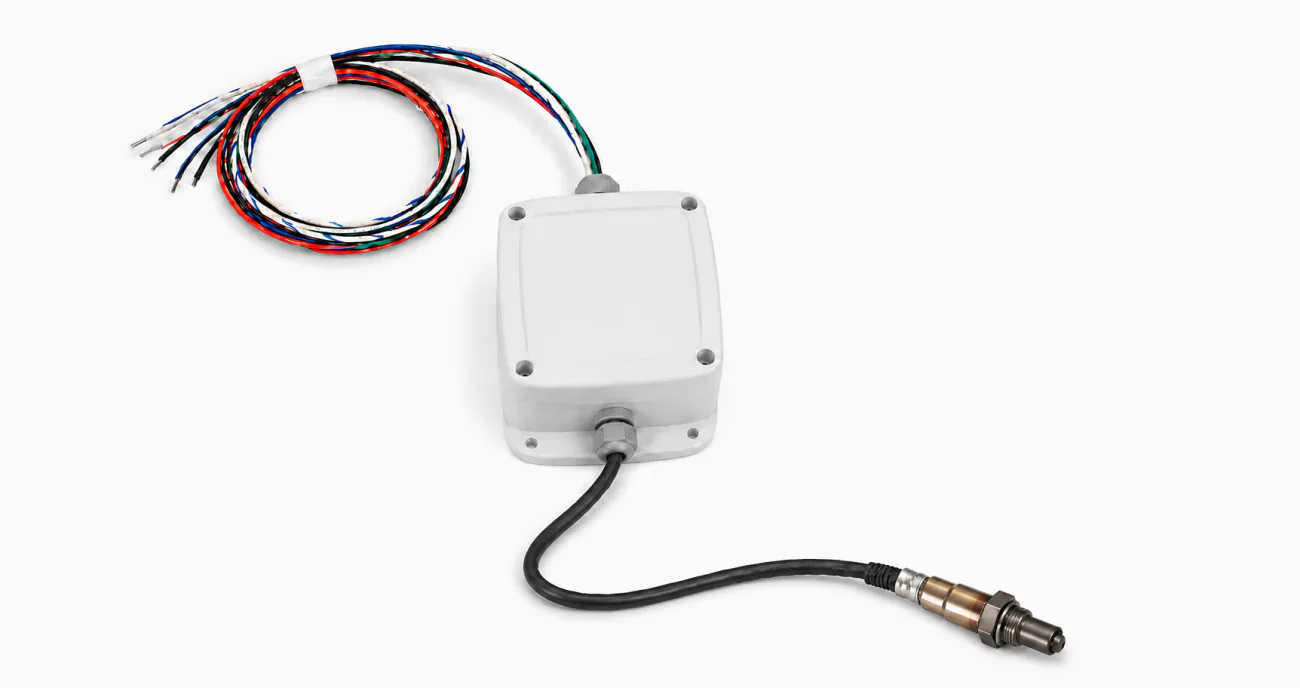
Commercial Monitoring Panel
The panel tracks oxygen and temperature between visits. Facility teams can spot changing conditions, give service technicians a better starting point, and investigate opportunities to reduce avoidable fuel use.
Start with one furnace, boiler, or equipment group. We’ll review the application and define a practical starting scope.
Commercial Monitoring Panel
DBISCMMGas-fired commercial equipmentLower-risk starting scope
Start with one representative appliance before a wider rollout.Commercial applications
The Commercial Monitoring Panel adds a continuous record to gas-fired equipment in offices, multifamily properties, retail facilities, institutions, and other commercial buildings.
Continuous oxygen and temperature visibility for commercial boilers and large water heaters.
Monitoring for make-up air units and packaged rooftop equipment.
Support for commercial furnaces, heaters, and similar gas-fired equipment.
What changes for the building team
Use the panel as a standalone service tool or connect it to the building automation system. Oxygen and temperature trends help teams prioritize attention, document service work, and evaluate site-specific economic value.
Follow responsive oxygen data and steady thermal context instead of waiting for the next scheduled snapshot.
Use live oxygen, temperature, and equipment health data to identify which equipment warrants a closer look.
Connect through BACnet MS/TP over RS-485 or use 4-20 mA and 2-10 V analog outputs.
Connect the companion app locally through Bluetooth for live data and diagnostics.
What happens inside the monitor
Both monitoring platforms acquire oxygen data every 100 milliseconds and temperature data every 1 second. The signal processing steadies the measurements so teams can compare equipment and follow trends with better context.
100milliseconds
A new internal oxygen measurement every 100 milliseconds provides a current view as combustion conditions change.
15samples
The 15-sample moving average refreshes with every valid reading. This smooths brief fluctuations while keeping the measurement responsive.
1second
Each temperature measurement is taken once per second and averages 8 readings for a steadier thermal signal.
These are on-device measurement intervals. Display, network, and BAS update rates depend on the connected interface and system configuration.
At the equipment
The companion app provides live oxygen and temperature data, diagnostics, and authorized configuration functions. It is in development for iOS, Android, Windows, and macOS.
Development interface shown. Final appearance and available functions may change.
Deployment and service
A representative appliance lets the building team evaluate reliability, service usefulness, integration, and economic potential against an agreed baseline before adding more equipment.
Select a boiler, rooftop unit, heater, or appliance group with a clear operating question.
Confirm installation, safety, BAS integration, commissioning, and the result you need to measure.
Record oxygen and temperature across representative operating conditions.
Review drift, service usefulness, reliability, and site-specific economic potential before scaling.
Connectivity and integration
Share approved monitoring points with the building automation system while preserving a local Bluetooth workflow for the person standing at the equipment.
BACnet MS/TP
Share approved monitoring data with an existing BAS over BACnet MS/TP.
4–20 mA
Provide a standard analog signal for compatible controls and monitoring workflows.
2–10 V
Connect with systems that accept a standard 2–10 V analog input.
Bluetooth LE
Connect the companion app for live oxygen and temperature data, diagnostics, and authorized configuration.
The Commercial Monitoring Panel is a monitoring and service layer. Existing certified burner-management and safety systems remain authoritative.
Technical review
Final configuration and pricing reflect the equipment, installation and commissioning scope, integration requirements, site conditions, shipping, and requested engineering or support services.
PRODUCT
PART NUMBER
DBISCMMSUPPORTED INTERFACES
BACnet MS/TP · 4–20 mA · 2–10 V · BluetoothOXYGEN ACQUISITION
Every 100 milliseconds · 15-sample moving averageTEMPERATURE ACQUISITION
Every second · 8 readings per measurementCOMPANION APP
In development for iOS · Android · Windows · macOSOVERVIEW
PRODUCT SCOPE
DEPLOYMENT
BAS INTEGRATION
Commercial FAQs
The panel can reveal changing combustion conditions between service visits, help facility teams direct attention to the equipment that warrants it, and provide before-and-after records for maintenance or tuning. It can also supply site data for investigating avoidable fuel use. The return depends on the equipment’s starting condition, operating hours, fuel price, and the action taken.
No. It makes scheduled and responsive service better informed. Technicians can arrive with trend context, review live readings at the equipment, and document whether their work changed the operating condition. Maintenance requirements and service intervals still follow the equipment manufacturer and the site’s operating plan.
The panel is intended for commercial gas-fired equipment such as boilers, water heaters, make-up air units, rooftop units, furnaces, and heaters. Installation and final configuration are reviewed for the selected equipment and site.
Technicians can connect locally through Bluetooth Low Energy and use the companion app to review live oxygen and temperature data, diagnostics, and authorized configuration functions.
Yes. The Commercial Monitoring Panel supports BACnet MS/TP over RS-485, 4-20 mA, and 2-10 V outputs. The project team confirms the points, wiring, scaling, polling, and commissioning requirements for the installation.
No. It is a monitoring and service layer. Existing certified burner-management and safety systems remain authoritative, and actual combustion adjustments require qualified personnel and appropriate safety testing.
Commercial application review
Share the equipment type, building environment, existing BAS, and the decision your team needs better evidence to make.
Request an Application Quote